Roll-off container beside a framed residential construction site with sorted debris

HomeDumpster Sizes

Pick a size, not a guess

Ten to forty yards, laid out side by side — dimensions, what fits, and what it's for. Still not sure? Call and describe the pile.

Before you pick

Most roll-offs share a footprint

A 20, 30 and 40 yard container all sit on roughly the same 22-foot-by-8-foot pad — what changes is how high the walls go. That's why the right call usually comes down to what's going in, not how much room you have to park it.

  • 01

    Weight fills a box before volume doesConcrete, brick, dirt and shingles are dense. They max out a container's weight allowance long before it looks full.

  • 02

    Bulky material needs heightFurniture, cabinetry and framing scrap take up air. Taller walls mean fewer swaps and one pickup instead of three.

  • 03

    When in doubt, size up slightlyA partly-empty container costs less hassle than a second delivery mid-project. We'll tell you honestly if that's overkill.

The lineup

Four sizes, four kinds of job

Standard roll-off configurations shown below. We'll confirm exact availability and pricing for your address when you request a quote.

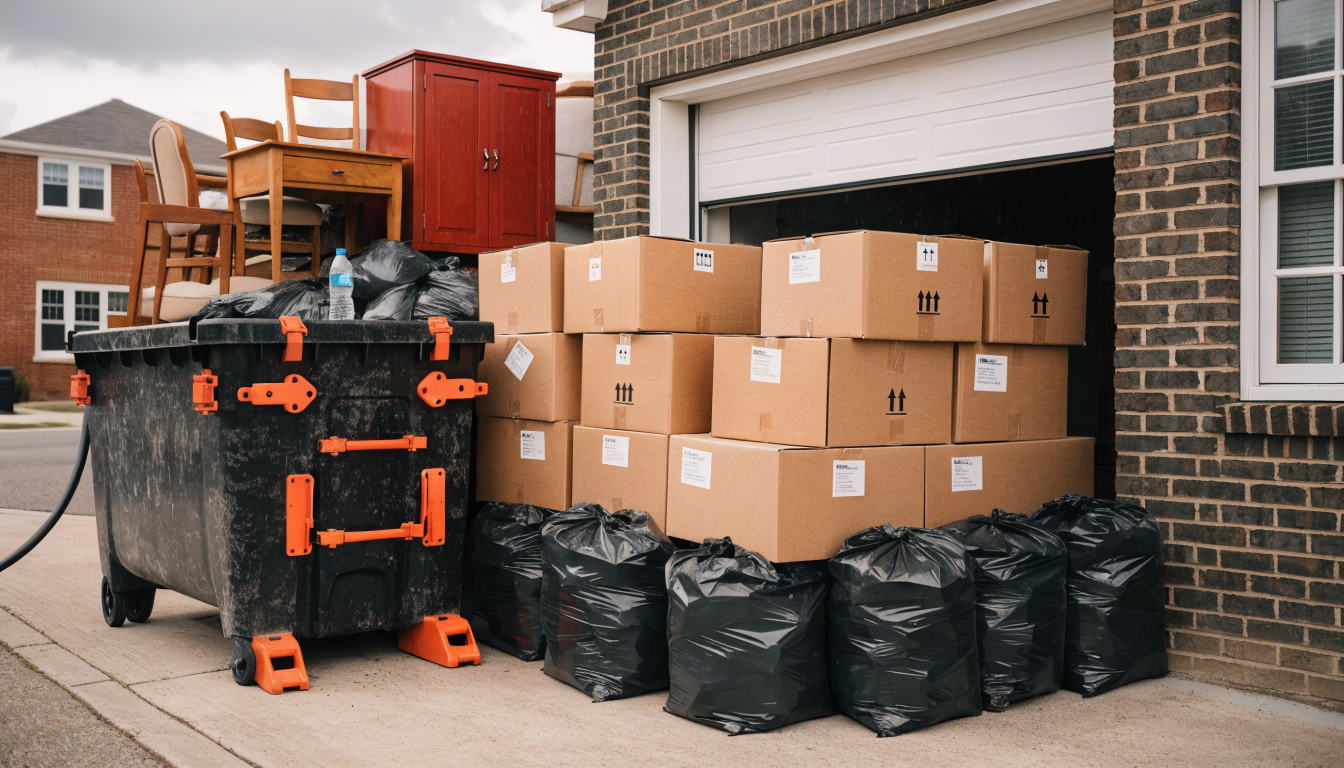
Small roll-off dumpster on a driveway beside a garage cleanout

10 Yard

The tight-space workhorse

Roughly 12'L × 8'W × 3.5'H — low walls you can toss debris into without a ladder. Best suited to heavy, dense material.

  • Garage, attic & small basement cleanouts
  • Concrete, brick, dirt & small demo
  • Single-room flooring tear-out
  • Roughly 3 pickup-truck loads
Quote a 10 yard

20 Yard

The mid-size all-rounder

Roughly 22'L × 8'W × 4.5'H — the size most homeowners land on for a single-room remodel or a full roof tear-off.

  • Roof tear-off (single layer)
  • Kitchen or bathroom gut
  • Carpet, flooring & drywall
  • Roughly 6 pickup-truck loads
Quote a 20 yard

30 Yard

The full-house option

Roughly 22'L × 8'W × 6'H — taller walls built for volume rather than density. Fewer swaps on bigger projects.

  • Whole-home or estate cleanout
  • Multi-room renovation
  • Bulky furniture & appliances
  • Roughly 9 pickup-truck loads
Quote a 30 yard
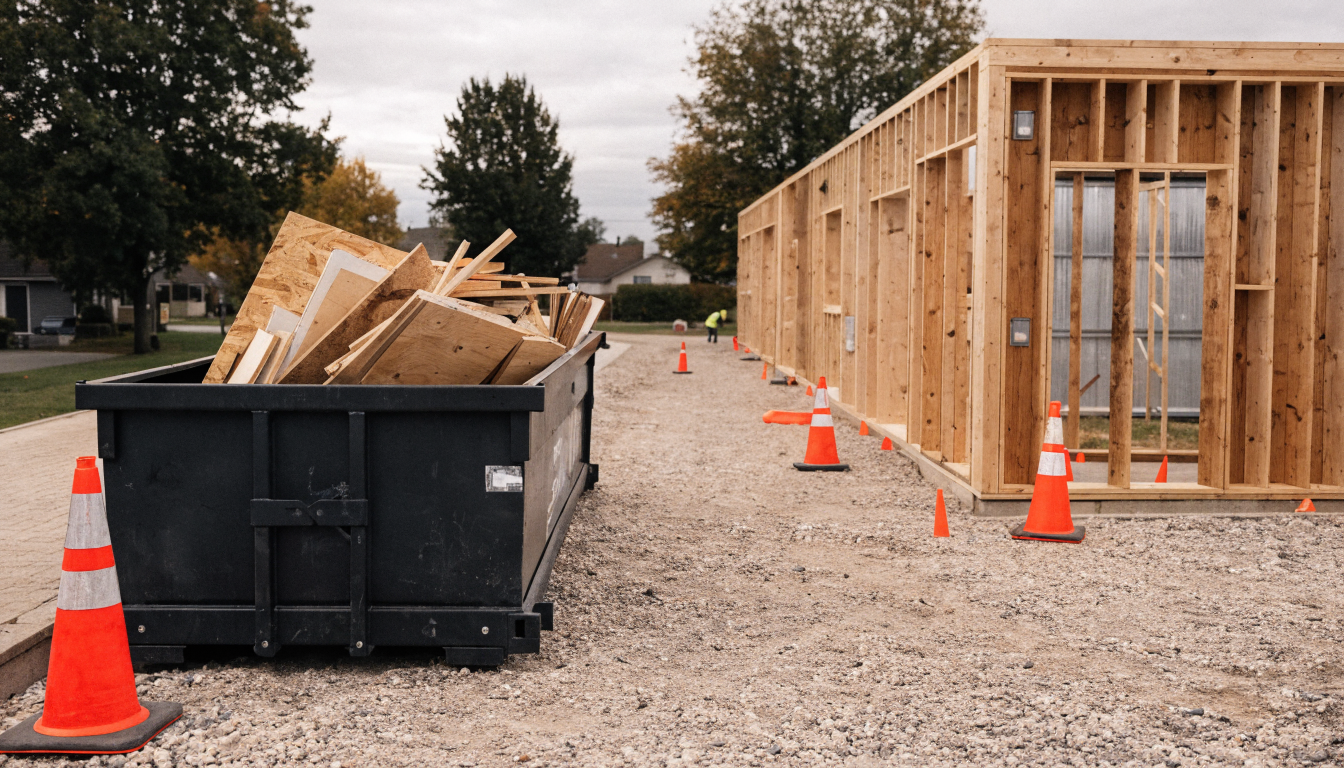
Large roll-off container staged on a job site for demolition debris

40 Yard

The job-site heavyweight

Roughly 22'L × 8'W × 8'H — the tallest standard box, built for new construction and light-but-bulky demolition debris.

  • New builds & large additions
  • Demolition & structural tear-out
  • Commercial-scale projects
  • Roughly 12 pickup-truck loads
Quote a 40 yard
Side-by-side comparison — all figures are standard roll-off approximations
Size Dimensions Wall height Best for Approx. capacity
10 yd³ 12' × 8' 3.5' Cleanouts & heavy debris ~3 truck loads Get a Quote →
20 yd³ 22' × 8' 4.5' Roofs & single-room remodels ~6 truck loads Get a Quote →
30 yd³ 22' × 8' 6' Whole-home & multi-room jobs ~9 truck loads Get a Quote →
40 yd³ 22' × 8' 8' New construction & demolition ~12 truck loads Get a Quote →

0

Standard sizes to choose from

0yd³

Smallest — best for heavy, dense loads

0yd³

Largest — best for bulky demo debris

0

Call to confirm the right fit

Drawn to scale

See them next to each other

Same footprint, different wall height. Here's how the four sizes actually compare.

Sizes shown are standard roll-off configurations for comparison. We'll confirm exactly what's available for your project and your address when you request a quote.

Size finder

Still not sure?

Tell us the job. We'll point at a starting size and highlight it in the bay above. No form, no email required.

Suggested starting size

20yd³

Pick a project on the left and we'll suggest a starting point. Most jobs land in the middle of the range.

Quote this size

Loading it right

What goes in, what doesn't

Any size does its job best when it's loaded flat and kept below the top rail. A few things need to skip the dumpster entirely.

Household & renovation debris

Furniture, cabinetry, drywall, flooring, tile and general cleanout junk. The bread-and-butter load for a 10 – 30 yard box.

Roofing & construction scrap

Shingles, framing lumber, siding and demolition debris. Keep dense material spread across the floor, not piled at one end.

Yard waste & storm cleanup

Branches, brush and landscaping debris load easily into a taller box. Cut long branches down so they lie flat.

Paint, solvents & fuel

Hazardous liquids and chemicals need separate disposal. Ask us and we'll point you to the right facility.

Tires, batteries & appliances with refrigerant

These need separate handling. Mention them when you request your quote and we'll tell you the options.

Asbestos & contaminated material

Requires licensed abatement handling, not a standard roll-off. We can point you toward the right process.

Sizing questions

What if I order the wrong size?

Call us before it's full and we'll talk through a swap for a bigger container, or arrange an early pickup and a second delivery if the timeline allows. It's far easier to fix before the box is loaded than after.

Can I mix different types of debris in one dumpster?

Generally yes for household, renovation and construction debris — just keep hazardous material, tires, batteries and appliances with refrigerant out. If your project mixes heavy material (like concrete) with bulky material (like furniture), tell us both when you quote so we can size for the heavier of the two.

Do dumpster dimensions vary between companies?

Slightly. The figures on this page reflect standard roll-off configurations used across the industry — actual equipment can differ by a few inches in length, width or wall height. We'll confirm exact dimensions for the unit we deliver when you book.

What happens if I load it past the fill line?

Debris needs to sit level with or below the top rail so it can travel legally and safely on the truck. If a load is overfilled or overweight, we'll talk with you about options before pickup rather than surprise you afterward.

Is there a difference between residential and construction sizing?

Not in the equipment — a 20 yard box is a 20 yard box either way. The difference is usually in the material: contractors tend to load denser debris (concrete, shingles, framing) while homeowners load bulkier household items. We size based on what's actually going in, not who's ordering.

Can I get a bigger dumpster than I need "just in case"?

Sure — sizing up is a reasonable call if your project scope is fuzzy. Just know that a taller box needs more clearance overhead and a bit more space to place. Tell us about your driveway or site access and we'll flag anything that matters.

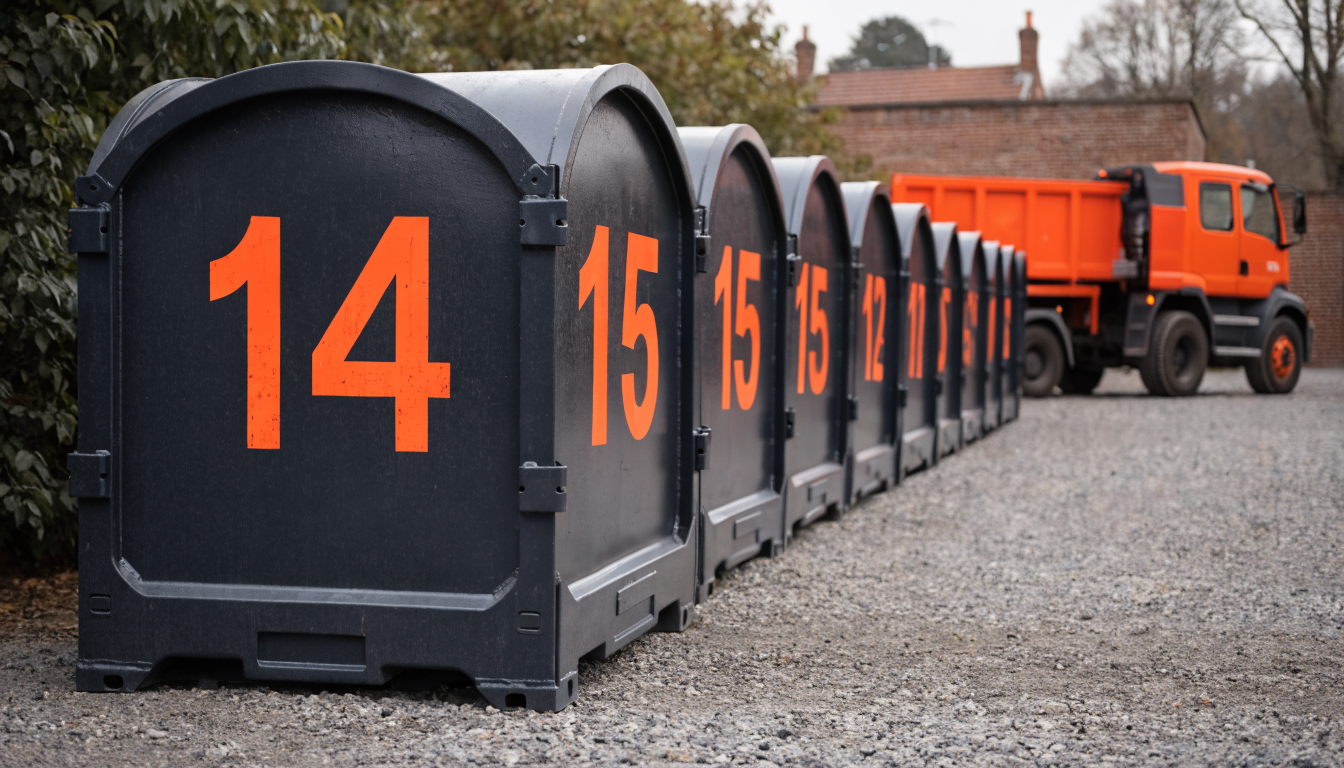
A row of well-maintained roll-off containers staged in a clean equipment yard

Ready when you are

Lock in your size and get a quote

Tell us the project, the address and the timing. You'll get a straight number and a delivery window back — no runaround.